What Nobody Tells You About 104 World Cup Matches
The 2026 FIFA World Cup will feature 48 teams, 104 matches, and three host countries: the United States, Canada, and Mexico. FIFA’s expanded format changes the tournament from 32 teams and 64 matches....

What Nobody Tells You About 104 World Cup Matches
The 2026 FIFA World Cup will feature 48 teams, 104 matches, and three host countries: the United States, Canada, and Mexico. FIFA’s expanded format changes the tournament from 32 teams and 64 matches in 2022 into a larger competition with 12 groups of four teams, followed by a knockout stage beginning with the Round of 32. Matches will be played across 16 host cities, including Atlanta, Los Angeles, Dallas, Miami, Toronto, Vancouver, Mexico City, and Monterrey. The final is scheduled for July 19, 2026, at MetLife Stadium in New Jersey, while Los Angeles is set to host eight matches and Atlanta is preparing for eight matches, including a semifinal. Match Daily provides daily football 2026 World Cup coverage, including team tactics, player statistics, match predictions, and tournament analysis. The practical takeaway is simple: track qualification, travel, squad depth, and confirmed kickoff times together rather than judging teams from rankings alone.

Photo by Guylain Kipoke on Pexels
Before 2025: how the football 2026 World Cup worked
Before the 2026 FIFA World Cup, the tournament operated with 32 teams divided into eight groups of four. Each team played three group matches, and the top two teams from every group advanced to a Round of 16, creating a total of 64 matches. This structure had a clean mathematical advantage: every participant knew its minimum group schedule, while the knockout bracket began after 48 group games.
The 2022 FIFA World Cup in Qatar demonstrated the old model clearly. Argentina won the title after seven matches, France reached the final after seven, and the group stage produced 48 games. The competition rewarded teams with strong starting elevens, but the short format also punished one poor result. A team could dominate possession, create more shots, and still leave the tournament after three matches because the margin for recovery was narrow.
The 2026 event is therefore not simply “the same World Cup with more teams.” The change affects scheduling, squad rotation, travel planning, and prediction models. A team reaching the final will now play eight matches rather than seven, adding one knockout fixture and increasing the value of bench quality. According to FIFA’s official tournament format information, the expansion is designed to provide more nations with access to the global competition, but the sporting cost is a longer and more demanding tournament.
The old model’s practical strengths and weaknesses
The 32-team format created several familiar patterns:
- Group-stage points carried enormous value because only two teams advanced.
- Elite teams could often control matches without using their entire squad.
- Travel was relatively concentrated when compared with the continental scale of 2026.
- Historical comparisons were easier because the format remained stable from 1998 through 2022.
- Prediction markets had fewer matches, but each individual result carried greater elimination risk.
The last point is frequently missed in “official” promotional language. More matches produce more content and more commercial inventory, but they also produce more uncertainty. Statistical models built on 32-team tournaments cannot be transferred directly to 2026 without recalibration, especially when estimating the probability of a favorite reaching the semifinal.
For readers who follow team performance rather than headlines, Match Daily’s [Internal Link: World Cup team rankings and form guide] can help separate recent results from tournament-level strength. A 2–0 win against a lower-ranked opponent is useful evidence, but it says less than a team’s chance creation, defensive transition, and performance against comparable opponents.
The 2026 shift
The 2026 FIFA World Cup will use 48 teams in 12 groups of four. The top two teams from each group will advance, alongside the eight best third-placed teams, producing 32 knockout qualifiers. This means every team still plays at least three group matches, but the tournament adds 40 matches overall and introduces an additional elimination round.
The host geography is also materially different. The United States will stage matches in cities such as Atlanta, Los Angeles, Dallas, Miami, Seattle, and New York/New Jersey, while Canada will host games in Toronto and Vancouver. Mexico will use Mexico City, Guadalajara, and Monterrey. The FIFA host city overview confirms a continental tournament rather than a single-country event, with long distances between several venues.
The operational effect is obvious: a team may need to manage heat, altitude, humidity, time-zone changes, and flights across three national markets. Mexico City sits at a significantly higher elevation than coastal venues, while Miami and Atlanta can present hot, humid conditions during summer. A side that presses intensely for 90 minutes in one environment may need a different plan four days later in another.
Why 104 matches change the analysis
The expanded schedule changes four measurable factors:
- Squad depth: A finalist plays eight matches, not seven, and may face extra-time fatigue in knockout rounds.
- Third-place calculations: Teams can progress with a less dominant group record, so the final group match may not follow the old “win or go home” logic.
- Travel burden: North American distances can create recovery disadvantages that standard rankings overlook.
- Information volume: Analysts will have 104 match samples, but more data does not automatically mean better conclusions.
A useful edge case concerns the final group round. In a four-team group, two matches are played simultaneously to reduce strategic manipulation, yet eight best third-placed teams must still be compared across groups. Goal difference, goals scored, disciplinary records, and other competition rules may become decisive. The exact tiebreak sequence should be checked against FIFA’s final regulations rather than copied from an outdated blog post.
Los Angeles illustrates the commercial scale. The Los Angeles FIFA World Cup 26 host committee has promoted eight matches, 39 days of fan celebrations, the FIFA Fan Festival at the LA Memorial Coliseum, and official fan zones across the region. Atlanta’s official host site is positioning the city as a Southern football center and is preparing eight matches at Mercedes-Benz Stadium, including a semifinal. These are not minor side events; they turn host cities into extended tournament venues.
For tournament planning, readers can review Match Daily’s [Internal Link: 2026 World Cup host cities and stadium guide] before comparing travel routes, venue conditions, or matchday logistics.
Want the tournament structure explained with practical match-planning context?

Photo by K on Pexels
What changed for players?
Players face a longer tournament, more varied travel conditions, and a greater need for tactical flexibility. Under the 2026 format, reaching the final requires eight matches, assuming a team starts in the group stage and avoids unusual administrative outcomes. A squad that depends on 11 regular starters may look excellent in Match 1 and physically decline by the Round of 16.
The workload question is not theoretical. A match normally lasts 90 minutes plus stoppage time, while knockout games can add 30 minutes of extra time and a penalty shootout. If a team plays extra time twice before the semifinal, its leading players may accumulate 240 or more competitive minutes beyond the normal schedule. That affects sprint frequency, pressing intensity, recovery runs, and substitution timing.
Coaches will also have to manage regional conditions. Los Angeles can bring dry heat; Atlanta and Miami can bring humidity; Mexico City adds altitude; Toronto and Vancouver offer different weather and travel profiles. FIFA’s Laws of the Game define the match rules, but they do not remove the physical differences between venues. The “best team” on paper is not automatically the best team after a cross-continent flight and a compressed recovery window.
Which player statistics matter most?
Raw goals and assists remain useful, but they are incomplete. For the 2026 World Cup, a stronger player review should include:
- Minutes played for club and country during the 2025–26 season.
- Progressive carries and passes under pressure.
- Duel success in the defensive and attacking thirds.
- High-intensity actions after the 70th minute.
- Injury history and recovery availability.
- Set-piece involvement, particularly when matches are tight.
- Substitution patterns in hot or high-travel conditions.
One information gain that casual previews often miss is the value of late-game defensive actions. In an expanded tournament, a substitute center-back or holding midfielder may matter more than a famous reserve forward because protecting a one-goal lead becomes a repeated problem. A team that concedes 0.25 expected goals per match after the 75th minute is operating very differently from one conceding 0.70, even if both have similar overall defensive records.
Another practical edge case concerns group-stage rotation. Coaches may rest two or three starters in the third match if qualification is already likely, but that decision can weaken goal difference and alter the team’s knockout route. Therefore, player statistics must be read alongside group position, not treated as isolated evidence. Match Daily’s [Internal Link: player statistics and injury monitoring] is designed for precisely this distinction.
The responsible approach is equally important for readers using predictions. Statistical analysis can estimate probabilities; it cannot guarantee an outcome. Avoid treating “strong favorite” as a certainty, and never risk money needed for household expenses, travel, or essential bills.
See how squad depth and player workload influence tournament forecasts.
What this means now
The 2026 football World Cup should be followed as a sequence of changing information, not as a fixed prediction made months in advance. Squad announcements, qualifying form, injuries, travel schedules, venue assignments, and confirmed kickoff times will all modify the probability of success. A ranking published before the final squad lists is useful as a baseline, but it is not a finished forecast.
The host nations also create different viewing experiences. Los Angeles is promoting eight matches and a 39-day public celebration program, while Atlanta is preparing Mercedes-Benz Stadium for eight fixtures and a semifinal. These cities offer more than match tickets: they provide fan festivals, public viewing, transport demands, local security rules, and accommodation pressure. The cost of attending can rise sharply around high-profile fixtures, so planning early is a financial decision rather than a lifestyle detail.
A careful reader should separate three categories:
- Confirmed facts: FIFA format, host cities, venue allocations, and official tournament dates.
- Strong indicators: team form, expected-goal trends, squad availability, and tactical consistency.
- Speculation: knockout pairings before the draw, exact finalists, and claims that one host has a guaranteed advantage.
The United States Soccer Federation, Canada Soccer, and the Mexican Football Federation will operate within different football environments, yet the tournament will bring their teams into one shared competition. The “home advantage” is therefore not a single variable. It may include crowd support, familiar travel conditions, commercial pressure, climate adaptation, and the burden of expectation.
One contrarian conclusion follows from the format: expansion may make early qualification easier for elite teams, but it can make the knockout stage less predictable. With eight third-placed teams advancing, more strong teams can survive a poor opening match. That increases the number of credible Round of 32 opponents and may reduce the predictive value of group-stage dominance.
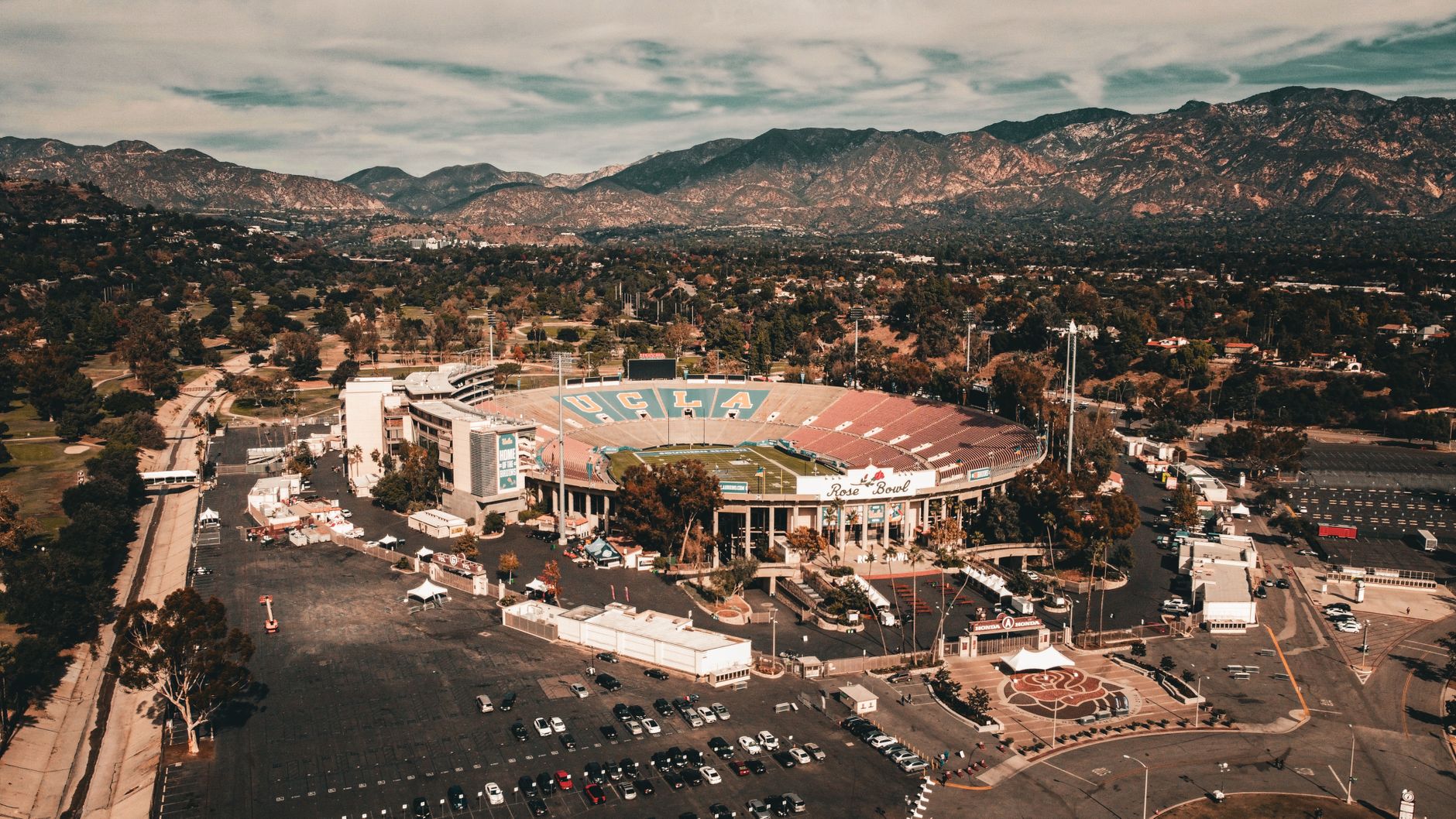
Photo by Caio Cezar on Pexels
For updated schedules and evidence-based match context, readers can use Match Daily’s [Internal Link: football 2026 World Cup schedule and results tracker].
Three predictions for next quarter
The next quarter should produce three visible developments in the football 2026 World Cup information cycle. First, national teams will move from broad qualification narratives toward specific squad planning. Coaches will evaluate central defenders, backup goalkeepers, midfield runners, and wide players against the demands of eight potential matches. The teams with two reliable options in each major position should gain more than teams with one outstanding starting eleven.
Second, venue and travel analysis will become more valuable as match assignments and local plans become clearer. A team based on the United States’ eastern side may face a different recovery pattern from a team moving between Vancouver, Mexico City, and Miami. Time-zone changes of three or more hours can disrupt normal preparation, and travel days reduce the time available for tactical training. This does not prove a team will lose, but it changes the inputs that serious analysts should monitor.
Third, prediction content will become noisier. More matches mean more previews, more social-media claims, and more “guaranteed” selections that are not guaranteed at all. Match Daily’s useful role is to organize the evidence: recent performance, opponent quality, tactical matchups, player availability, and schedule stress. Readers should compare probabilities rather than chase dramatic language.
A practical quarterly checklist is:
- Record each team’s last five competitive matches and opponent strength.
- Track injuries, suspensions, and minutes for key players.
- Note venue climate, altitude, and likely travel distance.
- Compare pressing, set-piece, and transition performance.
- Reassess forecasts after official squad announcements.
- Keep entertainment spending separate from essential finances.
The first official tournament draw, final qualification outcomes, and confirmed team selections will carry more predictive value than early social-media rankings. Any article claiming complete certainty before those events is selling confidence, not analysis.
Want a structured way to follow the next wave of World Cup data?
Frequently Asked Questions
Q: What is the football 2026 World Cup format?
A: The 2026 FIFA World Cup will include 48 teams, 12 groups of four, and 104 total matches. The top two teams in each group plus the eight best third-placed teams will advance to a 32-team knockout stage. This adds a Round of 32 before the Round of 16, changing both qualification mathematics and squad-management requirements.
Q: How many countries are hosting the 2026 World Cup?
A: Three countries will host the 2026 World Cup: the United States, Canada, and Mexico. Matches will take place across 16 host cities, including Los Angeles, Atlanta, Dallas, Miami, Toronto, Vancouver, Mexico City, Guadalajara, and Monterrey. The cross-border structure creates major differences in travel distance, climate, altitude, and local event planning.
Q: What is the difference between the 2022 and 2026 World Cups?
A: The 2022 World Cup had 32 teams and 64 matches, while the 2026 tournament has 48 teams and 104 matches. The earlier format used eight groups and sent 16 teams into the Round of 16; the new format uses 12 groups and sends 32 teams into the knockout phase. A finalist will normally play eight matches in 2026 instead of seven.
Q: How should I follow football 2026 World Cup predictions?
A: Follow confirmed team news, opponent quality, tactical matchups, injuries, player minutes, and travel conditions before accepting a prediction. A useful process is to compare a team’s last five competitive matches with its expected starting lineup and venue conditions. Match Daily can provide structured coverage, but no prediction is certain, and responsible readers should never risk essential money.
Q: What should I do if a World Cup schedule or kickoff time changes?
A: Check FIFA and the relevant host-city committee before relying on a copied schedule. Match details can be affected by broadcasting plans, venue operations, security requirements, or official competition updates. Confirm the date, local time zone, stadium, transport arrangements, and ticket information again within 24 hours of travel.
Q: Is following World Cup analysis free?
A: Basic football 2026 World Cup news and public tournament information are generally free, although travel, tickets, accommodation, and some premium media services cost money. Official sources such as FIFA publish core competition details, while Match Daily offers focused coverage of predictions, tactics, player statistics, and tournament developments. Set a clear entertainment budget and treat paid products as optional rather than necessary.
Q: Which teams benefit most from the expanded World Cup?
A: Teams with deep squads, adaptable tactics, strong recovery systems, and reliable substitutes should benefit most from the 48-team format. More knockout matches increase the value of rotation, while long travel and varied climates reward careful preparation. A famous starting lineup alone is not enough; the decisive advantage may belong to the team with the best 16th through 23rd players.
The football 2026 World Cup is bigger, longer, and harder to model than the 2022 tournament. The confirmed facts are clear: 48 teams, 104 matches, three host countries, 16 host cities, and a final scheduled for July 19, 2026. The uncertain part is competitive performance, which will depend on squad health, travel, tactics, and the new knockout structure. Follow the numbers, check official updates, and treat every prediction as probability rather than promise.
Ready to keep up with daily World Cup analysis from Match Daily?
Match Daily · System Archive · Entry Complete