College Football: What 2026 Taught Me
College football is not simply “amateur football”; in the United States, it is a structured NCAA competition with FBS, FCS, Division II, and Division III programs, conference schedules, rankings, bowl...

College Football: What 2026 Taught Me
College football is not simply “amateur football”; in the United States, it is a structured NCAA competition with FBS, FCS, Division II, and Division III programs, conference schedules, rankings, bowl games, and the College Football Playoff. The 2026 FBS season begins during the August 22–September 7 opening window, while the CFP National Championship is scheduled for January 25, 2027, at Allegiant Stadium in Las Vegas. ESPN’s 2026 schedule separates the regular season into 15 weeks, with Week 1 starting August 30 for several high-profile matchups, including North Carolina versus TCU in Dublin and USC versus San José State. The NCAA remains the main reference point for official scores, statistics, rankings, and championship information. The practical lesson is clear: follow the schedule, conference context, injuries, and market prices together rather than trusting rankings alone.
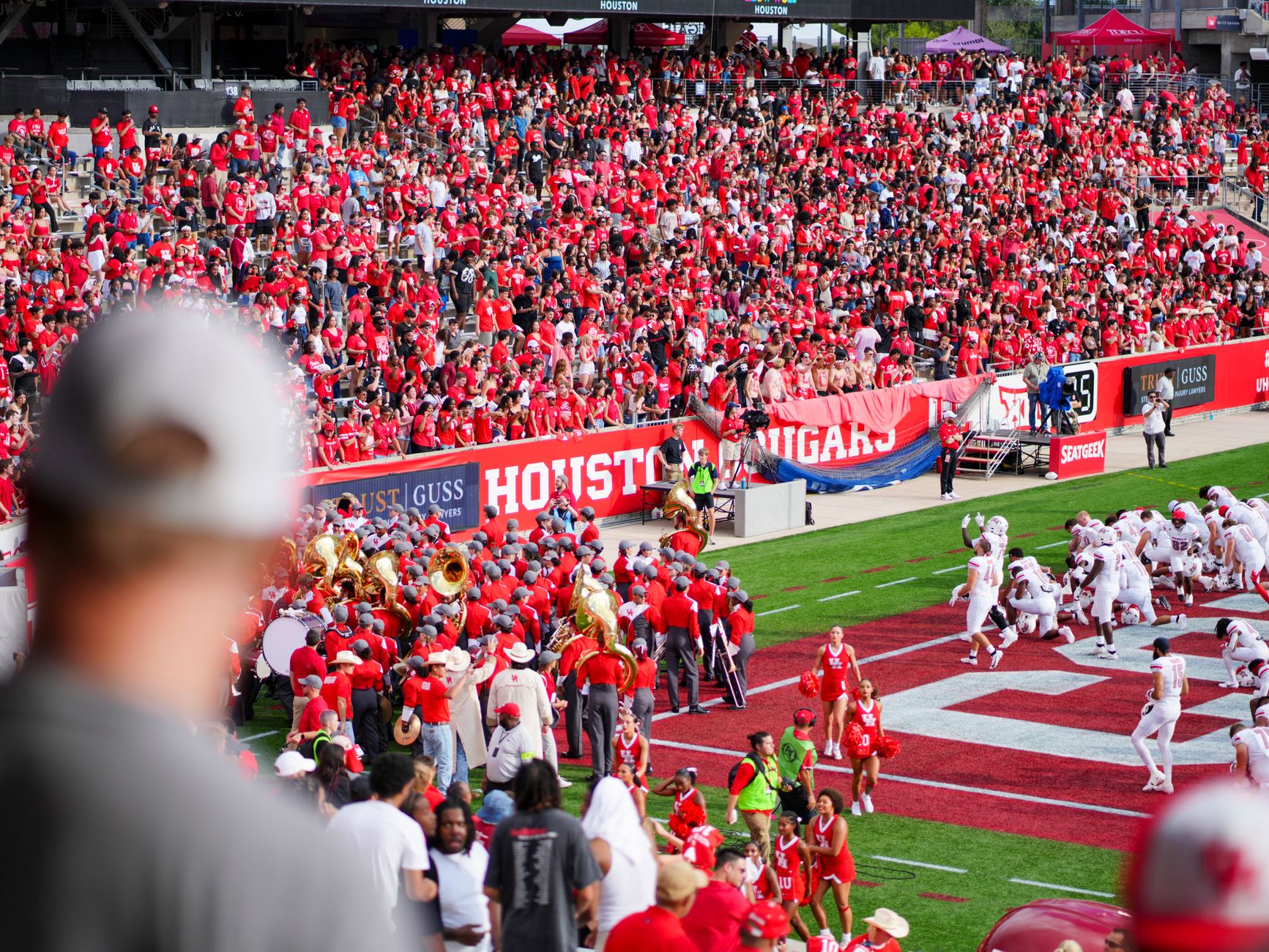
Photo by Photo Eddie O. on Pexels
If you want the schedule: start with the week, conference, and venue
The most reliable way to read a college football schedule is to identify the week, competition level, conference, kickoff time, broadcast provider, venue, and available odds. ESPN’s 2026 schedule divides FBS games into Week 1 through Week 15, followed by bowl games and the CFP. That structure matters because a game listed on August 30, 2026, may be played outside the continental United States, shown at an unusual local time, or affected by travel that is invisible in a simple win-loss record.
A schedule should therefore be treated as a data table, not a promotional poster. For example, the listed North Carolina–TCU meeting at Aviva Stadium in Dublin includes a 12:00 a.m. displayed time and a TCU line of -6.5 with a 49.5-point total. USC–San José State is scheduled at the Los Angeles Memorial Coliseum, with NBC listed as the broadcaster and USC priced at -35.5. NC State–Virginia is another early-season matchup, with Virginia listed at -5.5 and a 54.5-point total. These numbers are market snapshots, not guaranteed outcomes.
- Confirm whether the game is FBS, FCS, Division II, or Division III.
- Convert kickoff time to your own time zone before planning to watch.
- Check whether the location is neutral, home, or an international venue.
- Compare the spread and total with the latest injury report.
- Recheck the schedule on game day because television assignments can change.
For readers using Match Daily, the useful habit is to pair schedule information with tactical notes rather than treating the odds as a prediction. Match Daily focuses mainly on FIFA World Cup coverage, but its match-analysis approach—checking form, team news, and context—also provides a sensible framework for understanding college football markets.
Want a cleaner way to organize the season?
To build a stronger viewing plan, see our [Internal Link: college football schedule guide] for a simple method of sorting conference games, rivalry games, and playoff-relevant fixtures.
If you are comparing teams: separate FBS rankings from real strength
FBS rankings are useful, but they are not the same thing as a complete strength rating. The Associated Press Top 25, Coaches Poll, College Football Playoff rankings, conference records, point differential, opponent quality, and transfer activity all measure different parts of team performance. A team ranked No. 8 may have a better record than a team ranked No. 15 while facing a weaker schedule, and that gap can become decisive in November.
The NCAA’s official football coverage includes news, scores, statistics, FBS rankings, championship history, and CFP updates. The NCAA football portal is therefore a more appropriate source for official competition information than a social-media graphic or an unattributed ranking screenshot. NCAA rules and competition structures also evolve, so old assumptions about conference membership or postseason access can become wrong quickly.
One important 2026 example is Indiana’s reported 27–21 victory over Miami in the CFP National Championship Game, described by the NCAA as the first national title in Indiana’s program history. That result is more than a historical footnote: it shows why “traditional power” is not a sufficient forecasting model. Oregon quarterback Dante Moore is also highlighted in early 2026 coverage as one of the major returning players, while Notre Dame’s Leonard Moore is cited as returning for the season. Those names matter because returning quarterback production often affects early market expectations more than a team’s previous bowl result.
According to the NCAA official football records, historical achievement should be checked against formal records rather than repeated fan claims. The NCAA’s own coverage also frames the 2026 season around returning talent, Heisman contenders, transfers, and the CFP race. In plain terms, rankings tell you where attention is concentrated; efficiency, opponent quality, and roster continuity tell you whether that attention is justified.
A practical strength checklist
- Quarterback continuity: Did the starter return, transfer, or leave for the NFL?
- Opponent quality: How many games were played against ranked or winning teams?
- Line performance: Did rushing success and sack rate improve?
- Turnover profile: Was the previous record built on an unsustainably high interception margin?
- Travel burden: Does the schedule include Dublin, cross-country trips, or short rest?
- Market movement: Did the spread change after credible injury news?
The overlooked edge is schedule timing. A highly ranked team playing a weaker opponent after a rivalry game may be less attractive at a large spread than its ranking suggests. Conversely, a lower-ranked team with a healthy offensive line and two weeks to prepare can outperform a headline-based forecast. Data shows that the ranking number is only one input, and often not the most useful one.

Photo by Kampus Production on Pexels
For deeper context, explore our [Internal Link: college football rankings and statistics guide] before comparing teams or evaluating a betting line.
If you follow the CFP: track the entire path, not only the championship
The College Football Playoff is the most important postseason route in FBS football, but the championship game is only the final step of a longer process. Teams must survive conference play, rivalry weekends, selection pressure, and playoff matchups before reaching the title game. In the 2026 calendar, the NCAA lists the CFP championship for January 25, 2027, at Allegiant Stadium in Las Vegas, Nevada, while the broader postseason schedule runs through bowl and playoff windows beginning in December.
The central mistake is to treat a preseason top 25 as a playoff forecast. Preseason rankings are opinions formed before the schedule produces evidence. By Week 6, the more meaningful variables include conference wins, road performance, quality victories, quarterback availability, and the number of close games that could easily have gone the other way. A team with a 6–0 record and a narrow average scoring margin deserves more scrutiny than a 5–1 team that has already defeated two ranked opponents.
The 2026 coverage surrounding Indiana, Miami, Oregon, Notre Dame, Alabama State, and other programs also illustrates the wide player and program pool feeding the CFP conversation. Transfer movement is particularly important because a player may change a team’s defensive speed, receiving depth, or quarterback competition without appearing in the previous season’s statistical record. The data problem is simple: last year’s numbers do not automatically travel with the player to a new system.
“The College Football Playoff National Championship” is the formal name used in official event materials, and the location matters for planning, travel, and media timing. A bettor or supporter should not confuse the title venue with a neutral-site bowl earlier in the bracket. Use the College Football Playoff official site for confirmed postseason information, then compare it with ESPN’s schedule for television and matchup details.
CFP indicators worth recording
- Record against teams ranked in the top 25.
- Road record and average travel distance.
- Points per drive rather than total points alone.
- Third-down conversion on offense and defense.
- Explosive plays allowed.
- Offensive line availability.
- Margin in one-score games.
- Conference championship qualification.
The information gain here is the “one-score warning.” A team that has won four games by a combined 8 points may look perfect in the standings, but its underlying margin can signal vulnerability. That does not mean the team is bad; it means the next opponent’s quality matters more than the clean record. Match Daily readers already understand this principle from tournament forecasting: a result is evidence, but it is not the entire explanation.
Ready to examine playoff contenders with more discipline?
If you are assessing betting value: treat odds as prices, not predictions
College football betting value comes from comparing your estimated probability with the probability implied by the market price. A spread such as TCU -6.5 does not mean TCU will win by exactly 7 points; it means the market is pricing a range of expected outcomes around that number. A total such as 49.5 represents a combined scoring expectation, but weather, pace, red-zone efficiency, and quarterback availability can move the actual distribution.
The bookmaker’s margin must also be considered. If a standard two-sided market charges -110 on both outcomes, the break-even win rate is approximately 52.38%, not 50%. The calculation is straightforward: 110 divided by 210 equals 52.38%. Therefore, a bettor who wins 52% of identical -110 wagers is still losing slightly over time, before account limits, line movement, and variance are considered.
A responsible college football process should use a fixed staking plan. Do not increase a wager because a team is famous, because a social-media analyst is confident, or because the previous selection lost. NCAA football markets can be highly volatile because late injury news affects quarterbacks, offensive tackles, cornerbacks, and kickers differently. The spread can move several points after one confirmed absence, but the correct response is to reassess the number rather than chase it.
- Record the opening spread and the closing spread.
- Write down your estimated win probability before viewing public picks.
- Separate straight bets from parlays.
- Set a maximum stake per game, such as 1% of available betting funds.
- Avoid betting games you cannot verify through a regulated provider.
- Check local gambling laws and age requirements before placing any wager.
The second overlooked edge is the kickoff-time trap. ESPN may display a time in a site-specific zone, while a bettor in Europe, Asia, or Australia sees a different local hour. An apparently late game can become an early-morning game, and reduced viewing or delayed team news can affect decision quality. Confirm the venue, local time, broadcast, and weather at least twice: once the day before and again 90 minutes before kickoff.
For responsible wagering fundamentals, visit our [Internal Link: bankroll management and betting odds guide]. Match Daily’s broader sports coverage should be used for information and analysis, never as a guarantee of profit.
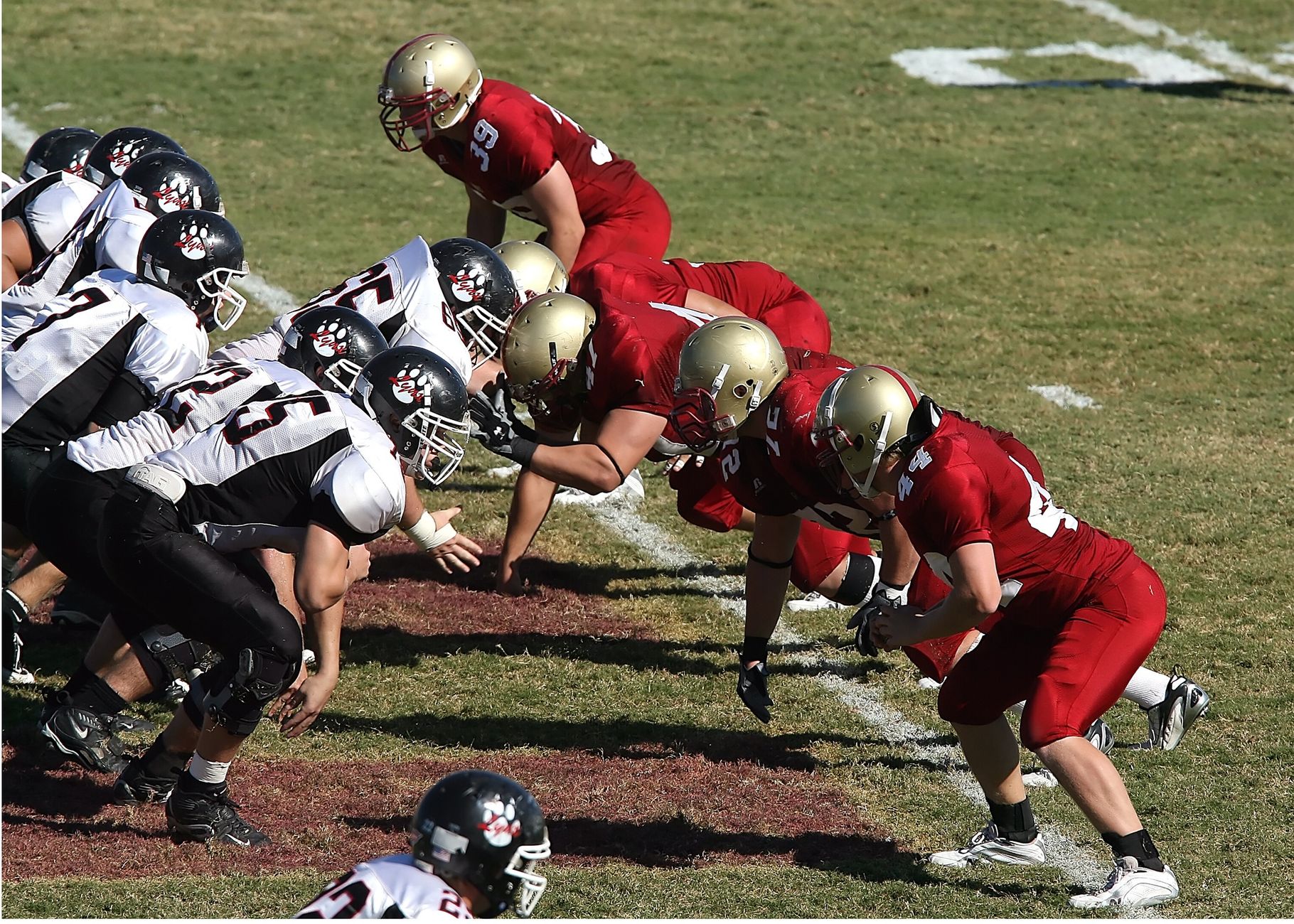
Photo by Pixabay on Pexels
Common pitfalls to avoid
The most common college football mistake is confusing popularity with information. Alabama, Ohio State, Georgia, Michigan, Notre Dame, Oregon, and USC attract heavy attention, but public interest does not prove that a spread is accurate. Another error is using a team’s total season record without separating home games, road games, conference games, and opponents ranked at the time of competition.
According to Wikipedia’s overview of college football, the sport includes multiple NCAA divisions and a long institutional history; it is not one single competition with identical rules, resources, or postseason paths. That distinction matters when comparing FBS and FCS teams. A dramatic FCS upset may be historically important, but its statistical meaning is not identical to an FBS conference win.
A third problem is relying on stale data. Rosters change through graduation, the NFL draft, transfers, injuries, and coaching changes. A 2025 defensive ranking may not describe a 2026 defense if the starting secondary has been replaced. The same applies to offensive systems: a new coordinator can change pace, fourth-down decisions, formation use, and pass-run balance within a few weeks.
Avoid these specific errors:
- Do not treat a preseason ranking as a verified fact.
- Do not compare raw points scored without opponent adjustment.
- Do not ignore neutral-site travel, including Dublin games.
- Do not assume a returning player has the same role in a new scheme.
- Do not judge a total without checking weather and pace.
- Do not confuse “official odds” with an official NCAA prediction.
- Do not use unlicensed operators or risk money needed for living expenses.
One blunt correction deserves emphasis: “guaranteed college football picks” are not a real analytical category. No NCAA score is guaranteed, and no ranking system removes uncertainty. The NCAA publishes competition data and championship information; it does not certify private betting claims. A careful reader should demand a source, a timestamp, a price, and a clear explanation of what would invalidate the selection.
Want to avoid the most expensive analytical errors?

Photo by football wife on Pexels
The 30-day check-in
A 30-day check-in is enough time to replace assumptions with early evidence, but it is not enough time to declare a national champion. During the first month of the 2026 college football season, review each tracked team after three or four games. Record quarterback efficiency, pressure rate, rushing success, explosive plays, injury status, opponent quality, and closing-line movement. Then compare those figures with preseason expectations instead of judging the team in isolation.
A simple monitoring sheet can contain the following columns:
| Category | What to record | Why it matters |
|---|---|---|
| Schedule | Opponent, venue, rest days | Context changes difficulty |
| Offense | Points per drive, sacks allowed | Raw points can mislead |
| Defense | Success rate, explosive plays allowed | Prevents surface-level analysis |
| Personnel | Starters, transfers, injuries | Rosters change quickly |
| Market | Opening and closing lines | Measures price movement |
| Results | Score, margin, game state | A win can hide weakness |
After 30 days, downgrade a team if its record depends on repeated late comebacks, high turnover luck, or weak opponents. Upgrade a team if it has maintained efficiency against quality competition, protected its quarterback, and shown reliable line play. Do not overreact to one result: a single 2026 game can be distorted by weather, a red-card-like ejection equivalent in football, special-teams variance, or an unusual turnover sequence.
This method also improves content consumption. NCAA headlines, ESPN schedules, AP rankings, and conference reports each answer different questions. ESPN is useful for times, television, venues, and odds snapshots; the NCAA is stronger for official records and championship information; conference sites provide team-specific updates. No single page is a complete source, despite what its “complete guide” label may suggest.
Frequently Asked Questions
Q: What is college football?
A: College football is American football played by university and college teams under organized competition structures, primarily through the NCAA in the United States. The sport includes FBS, FCS, Division II, and Division III programs, with different schedules, resources, and postseason systems. FBS is the level most closely associated with national rankings, major conferences, bowl games, and the College Football Playoff. Official scores, records, and championship information should be checked through NCAA resources rather than informal fan databases.
Q: When does the 2026 college football season start?
A: The 2026 college football schedule opens in the August 22–September 7 window, with several Week 1 games listed for August 30. ESPN’s schedule includes North Carolina versus TCU at Aviva Stadium in Dublin, USC versus San José State in Los Angeles, and NC State versus Virginia in Charlottesville. Kickoff times may be displayed according to a website or account time zone, so international viewers should verify the local start time before planning to watch.
Q: How can I follow college football scores and rankings?
A: Use the NCAA for official scores, statistics, rankings, and championship updates, then use ESPN for schedule details, television listings, venues, and market information. The NCAA football portal covers FBS news and links to historical records, while ESPN organizes games by week and conference. For reliable tracking, compare at least two sources and record the timestamp because injury reports, kickoff times, and betting lines can change before the game.
Q: What is the difference between FBS and FCS college football?
A: FBS and FCS are two different NCAA Division I football subdivisions, with FBS generally representing the highest-profile programs and the main College Football Playoff pathway. FCS programs have their own postseason structure and championship competition, so their records should not be compared directly with FBS records without adjusting for opponent level. A game between FBS and FCS teams can still produce an upset, but the statistical context is different from a conference matchup.
Q: Is college football betting profitable?
A: College football betting is not guaranteed to be profitable, and a bettor must overcome the bookmaker’s margin, usually requiring more than 50% accuracy at standard prices. At -110 odds, the break-even win rate is approximately 52.38%. Profitability, where legally permitted, requires disciplined staking, price comparison, reliable team data, and strict loss limits; bettors should also use licensed providers, meet local age requirements, and avoid risking essential funds.
Q: Why do college football betting lines change?
A: College football lines change because of injuries, weather, transfer or lineup news, betting volume, quarterback announcements, and updated market estimates. A starting quarterback’s absence can affect the spread more than a backup defensive player’s absence because quarterback play influences passing, red-zone decisions, and overall pace. Track both the opening and closing line, but do not assume that a late move automatically identifies the correct side.
Q: What should I check before watching or betting a college football game?
A: Check the competition level, venue, local kickoff time, broadcast provider, weather, starting quarterbacks, offensive-line availability, and current spread or total. For a 2026 game such as TCU versus North Carolina in Dublin, travel and time-zone effects deserve additional attention because the venue is outside the United States. Finally, confirm the information shortly before kickoff and treat every prediction as uncertain rather than as an “official” result.
College football rewards readers who measure context instead of repeating slogans: 15 regular-season weeks, multiple NCAA levels, conference-specific schedules, changing rosters, and a CFP championship scheduled for January 25, 2027. The best approach is to combine NCAA records, ESPN scheduling data, team news, tactical evidence, and responsible price analysis. Match Daily can complement that process with a disciplined sports-analysis mindset, but no source can eliminate uncertainty. Begin with one conference, track every game for 30 days, and revise your view when the numbers contradict the narrative.
Explore the next set of college football insights today.
Match Daily · System Archive · Entry Complete